Why Bill Maher’s Statements and Media Narratives Matter?
Introduction
I am a United States military veteran and a Muslim who served during the post?9/11 era. During my service, I personally witnessed and experienced discrimination, including biased treatment in the military, civilian sector, government policies at airports, and other public institutions. These experiences demonstrate that anti?Muslim rhetoric and policies are not abstract—they affect real people, including those who serve their country.
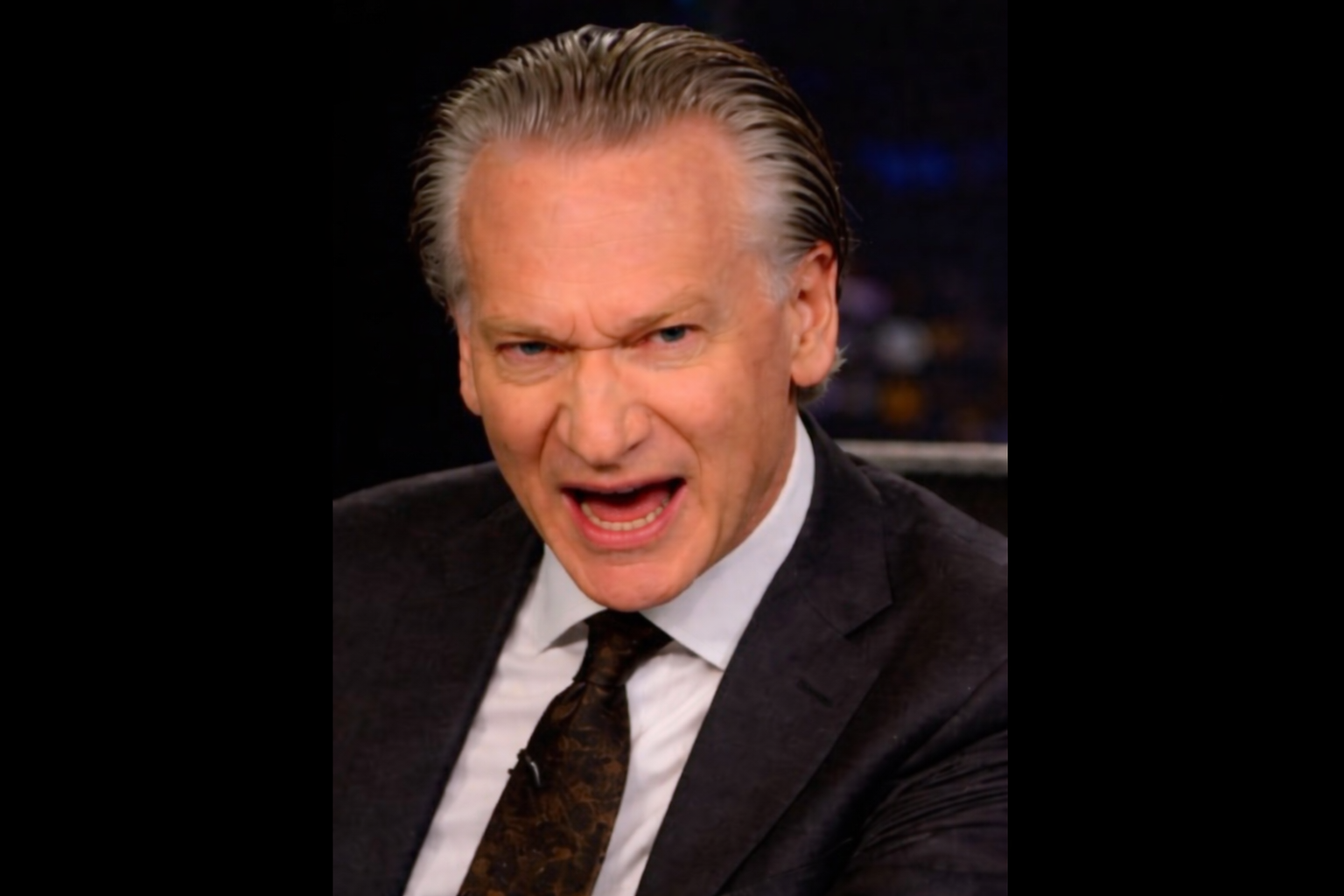
Since September 11, 2001, the United States has waged prolonged military campaigns in Muslim?majority countries while domestic discourse has frequently framed Islam as inherently violent or culturally incompatible with Western democracy. Among the most visible media voices advancing sharp critiques of Islam is Bill Maher, host of Real Time with Bill Maher on HBO. Maher, who identifies as an atheist, has described Islam as “the only religion that acts like the mafia,” suggesting that violence is intrinsic to the faith rather than limited to extremist factions (Vanity Fair, 2014).
Despite his atheist identification, Maher rarely critiques Judaism or Christianity in similarly sweeping terms. This selective criticism amplifies Islamophobic narratives and highlights a broader double standard in public discourse, where Muslim communities are disproportionately framed as dangerous or extremist.
Mainstream outlets such as Fox News have also been cited for disproportionately framing Muslims and Islam in the context of terrorism and security threats, shaping public perceptions and reinforcing Islamophobic narratives (PBS Frontline, 2023). Fox News is owned by Fox Corporation, led by Australian-American media executive Rupert Murdoch. Under his leadership, the network has maintained a pro-Israel editorial stance, which influences coverage priorities and programming decisions (Makovsky, 2020; Halbfinger, 2019).
This article argues that sweeping generalizations in media—regardless of intent—contribute to a climate of Islamophobia that coincides with, and helps normalize, two decades of war in Muslim-majority countries, and that such rhetoric has tangible consequences for Muslim Americans.
The Problem With Generalization
Criticism of religion is protected speech. However, equating a global faith of nearly two billion people with organized violence collapses distinctions between:
- Extremist organizations
- Authoritarian governments
- Cultural practices
- Ordinary believers
Research from the Pew Research Center (2023) demonstrates wide diversity in political attitudes, religious interpretation, and social values among Muslim populations worldwide. Religious studies scholars consistently caution against decontextualized readings of scripture that portray Islam as uniquely violent (Islamophobic trope, n.d.).
When public figures repeatedly frame Islam itself—not specific extremist groups—as the problem, the result is collective blame rather than targeted critique. Selective critique, such as Maher’s focus on Islam while rarely criticizing other religions, reinforces a cultural double standard and intensifies stigma toward Muslim communities.
Islamophobia and the Post?9/11 Security State
After 9/11, U.S. media coverage overwhelmingly associated Islam with terrorism. Studies show that repeated threat-based framing influences public attitudes toward surveillance, immigration restrictions, and military intervention (Islamophobia in the media, n.d.).
I have experienced this directly as a Muslim Military veteran:
- Biased scrutiny and suspicion in military units and intelligence agencies.
- Heightened screening and delays at airports and other government facilities.
- Generalized assumptions about loyalty and threat level based on faith.
Documented domestic consequences for the wider Muslim-American community have included:
- Expanded surveillance of Muslim communities
- Watchlisting and No-Fly List litigation
- Federal Bureau of Investigation (FBI) sting operations criticized by civil liberties groups
- Increased anti-Muslim hate crimes (FBI, 2023)
Islamophobia is not merely rhetoric—it has produced measurable civil liberties consequences.
The Human Cost of Post?9/11 Wars
The Brown University Watson Institute for International and Public Affairs Costs of War Project estimates that post?9/11 conflicts have resulted in approximately:
- 940,000 direct war deaths
- Over 432,000 civilian deaths
- 4.5–4.7 million indirect deaths from war-related disease, displacement, and infrastructure collapse (Brown University Watson Institute, 2025)
These wars occurred predominantly in Muslim-majority countries, including Afghanistan, Iraq, Syria, Libya, Somalia, Yemen, and now Iran.
U.S. Military and Veteran Losses
The costs have not been borne abroad alone. According to federal data:
- More than 7,000 U.S. service members killed
- Over 53,000 U.S. troops physically wounded
- At least 30,177 active-duty personnel and veterans have died by suicide
- Over 1.8 million veterans receive service-connected disability compensation (Mental Health Services, U.S. Department of Veterans Affairs, 2024)
These numbers represent lives permanently altered—families and communities changed forever.
The Financial Cost
The Costs of War Project estimates that U.S. post?9/11 wars have cost approximately $6–8 trillion in direct appropriations and long-term obligations, with broader security-state and interest costs raising total expenditures far higher (Brown University Watson Institute, 2025).
Sustained war spending was politically feasible in an environment where Muslim-majority regions were repeatedly framed as inherently threatening. While wars are driven by strategic and geopolitical decisions, public discourse shapes the public’s tolerance for such interventions.
Bill Maher’s Recent Comments on Gaza
In recent months, Bill Maher has remarked publicly on the conflict in Gaza, including questioning why student protesters — whom he has described as “keffiyeh-wearing college kids” — have not vocally opposed violence there (Fox News, 2025). On Real Time with Bill Maher, he asked, “Where are the protesters? Suddenly, the keffiyeh-wearing college kids are very quiet,” while referring to attacks by Hamas on both Israelis and Palestinians.
These comments reflect a broader media pattern in which complex humanitarian crises are discussed in reductive terms, often emphasizing the actions of insurgent groups while minimizing or sidelining international concerns about mass civilian harm and displacement in Gaza reported by humanitarian organizations and legal scholars.
Why Bill Maher and Fox News Matter
Bill Maher’s nationally broadcast commentary reaches millions. When he characterizes Islam or Muslim communities in sweeping, civilizational terms, these statements shape public opinion and normalize collective suspicion.
Similarly, Fox News has consistently aired programs associating Muslims with terrorism and security threats, influencing audience perceptions and reinforcing stereotypes (PBS Frontline, 2023). Fox News’ leadership publicly supports pro-Israel policies and maintains relationships with Israeli government officials, influencing coverage priorities and framing (Makovsky, 2020; Halbfinger, 2019).
Influential media figures and outlets are not policymakers, yet their narratives influence tolerance for war, surveillance, and discrimination. Maher’s selective criticism of Islam — while rarely critiquing other religions comparably — demonstrates a double standard that contributes to the marginalization of Muslim communities.
Advocacy and Policy Recommendations
- Precision in Public Commentary
Media figures should distinguish clearly between extremist actors and the broader Muslim population. - Institutional Responsibility by Media Platforms
Networks such as HBO and Fox News should provide context, expert commentary, and counter-narratives when hosting statements about entire faith communities. - Diversification of Information Sources
Audiences should consult international reporting, academic research, and voices from Muslim-majority countries to avoid one-dimensional narratives. - Consistent Standards Against Group Defamation
Ethical standards applied to combat antisemitism, anti-Black racism, or anti-Asian hate should also be applied to anti-Muslim rhetoric. - Recognition of War’s Full Cost
Policymakers and media must acknowledge both the civilian toll abroad and the long-term impact on U.S. service members and veterans. - Congressional Accountability for Divisive Rhetoric
Public officials such as Senator Tommy Tuberville and Florida Congressman Randy Fine portraying Americans of a particular faith as enemies should face ethical scrutiny and bipartisan repudiation. - Reaffirmation of Constitutional Principles
Leaders should explicitly reaffirm that religious freedom and equal protection under the law apply without exception to Muslim Americans.
Conclusion
Two decades of war in Muslim-majority countries have cost millions of lives, trillions of dollars, and immeasurable human suffering — both abroad and at home.
Rhetoric portraying Islam as inherently violent is not merely provocative commentary; it reinforces cultural narratives that normalize suspicion, discrimination, and war. Criticism of religious ideas is legitimate. Collective blame is not.
As a U.S. military veteran and Muslim who has witnessed and experienced discrimination and religious harassment firsthand, I know that public discourse and media narratives have real consequences. Selective criticism of Islam by influential figures like Bill Maher, combined with broader media framing and editorial priorities, contributes to the stigmatization and marginalization of Muslim Americans. For the United States to move beyond perpetual conflict and polarization, public discourse must reject sweeping generalizations and embrace evidence, nuance, and constitutional equality.
References
Brown University Watson Institute for International and Public Affairs. (2025). Costs of War Project: Human and financial costs of post?9/11 wars. https://costsofwar.watson.brown.edu/findings
Federal Bureau of Investigation. (2023). Hate crime statistics, 2022. U.S. Department of Justice. https://www.fbi.gov/services/cjis/ucr/hate-crime
Halbfinger, D. M. (2019, May 5). Fox News and the Israel connection: A network’s influence abroad. The New York Times. https://www.nytimes.com/2019/05/05/world/middleeast/fox-news-israel.html
Islamophobia in the media. (n.d.). In Wikipedia. https://en.wikipedia.org/wiki/Islamophobia_in_the_media
Islamophobic trope. (n.d.). In Wikipedia. https://www.wikipedia.org/wiki/Islamophobic_trope
Makovsky, D. (2020, March 12). Media, politics, and the U.S.-Israel relationship. Council on Foreign Relations. https://www.cfr.org/expert-brief/media-politics-us-israel
Mental Health Services, U.S. Department of Veterans Affairs. (2024). 2024 annual report on veteran suicide: Part 2 of 2. https://www.mentalhealth.va.gov/docs/data-sheets/2024/2024-Annual-Report-Part-2-of-2_508.pdf
PBS Frontline. (2023, July 25). America and Muslims by the numbers. https://www.pbs.org/wgbh/frontline/article/america-and-muslims-by-the-numbers
Pew Research Center. (2023). Global attitudes of Muslims. https://www.pewresearch.org/fact-tank/2023/global-muslim-demographics
Vanity Fair. (2014, December 12). Bill Maher interview: Islam, Berkeley, and controversy. https://www.vanityfair.com/news/politics/2014/12/bill-maher-interview-islam-berkeley
Fox News. (2025). Bill Maher asks where ‘keffiyeh-wearing college kids’ went as Hamas is ‘shooting everybody’. https://www.foxnews.com/media/bill-maher-blasts-keffiyeh-wearing-college-kids-silence-hamas-slaughters-palestinians-gaza
Leave a Reply